Guide to fictional Libraries #6 Great Missenden Library
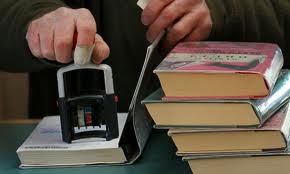
Following the lead of The Matilda Project The Alibi Library has decided to produce a short series highlighting the work of some of the best fictional libraries:
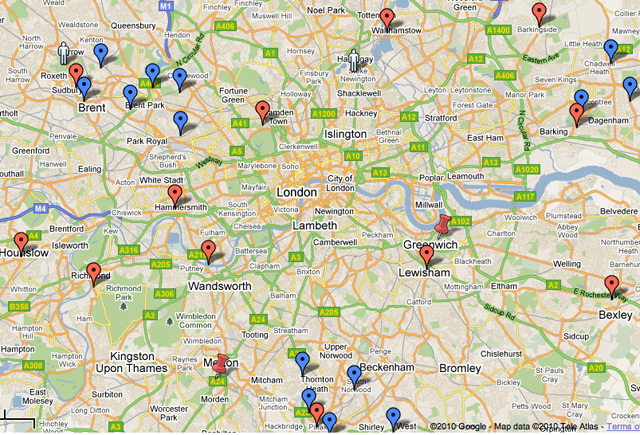
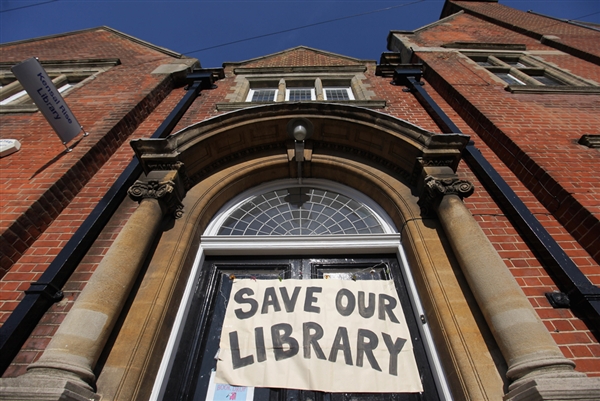
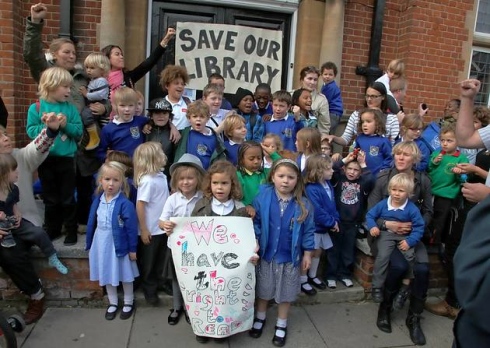
It seems that the library, in Great Missenden, which was the inspiration for Roald Dahl’s novel ‘Matilda’, , could be affected by cuts as councillors look to save almost £700,000. WORRIED rvillagers have set up an action group to secure the future of the library where the book’s heroine ‘reads every single book in the library’.
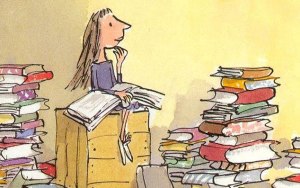
This extract from Roald Dahl´s Matilda clearly demonstrates the importance of these libraries in our communities:_
The Reader of Books
“Daddy,” she said, “do you think you could buy me a
book?”
“A book?” he said. “What d’you want a flaming book
for?”
“To read, Daddy.”
“What’s wrong with the telly, for heaven’s sake? We’ve got a lovely telly with a twelve-inch screen and now you come asking for a book! You’re getting spoiled, my girl!”
….
On the afternoon of the day when her father had refused to buy her a book, Matilda set out all by herself to walk to the public library in the village. When she arrived, she introduced herself to the librarian, Mrs Phelps. She asked if she might sit awhile and read a book. Mrs Phelps, slightly taken aback at the arrival of such a tiny girl unacccompanied by a parent, nevertheless told her she was very welcome.
“Where are the children’s books please?” Matilda asked.
“They’re over there on those lower shelves,” Mrs Phelps told her. “Would you like me to help you find a nice one with lots of pictures in it?”
“No, thank you,” Matilda said. “I’m sure I can manage.”
From then on, every afternoon, as soon as her mother had left for bingo, Matilda would toddle down to the library. The walk took only ten minutes and this allowed her two glorious hours sitting quietly by herself in a cosy corner devouring one book after another. When she had read every single children’s book in the place, she started wandering round in search of something else.
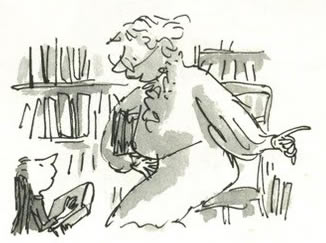
Mrs Phelps, who had been watching her with fascination for the past few weeks, now got up from her desk and went over to her. “Can I help you, Matilda?” she asked.
“I’m wondering what to read next,” Matilda said. “I’ve finished all the children’s books.”
“You mean you’ve looked at the pictures?”
“Yes, but I’ve read the books as well.”
Mrs Phelps looked down at Matilda from her great height and Matilda looked right back up at her.
“I thought some were very poor,” Matilda said, “but others were lovely. I liked The Secret Garden best of all. It was full of mystery. The mystery of the room behind the closed door and the mystery of the garden behind the big wall.”
Mrs Phelps was stunned. ”Exactly how old are you, Matilda?” she asked.
“Four years and three months,” Matilda said.
Mrs Phelps was more stunned than ever, but she had the sense not to show it. “What sort of a book would you like to read next?” she asked.
Matilda said, “I would like a really good one that grown-ups read. A famous one. I don’t know any names.”
Mrs Phelps looked along the shelves, taking her time. She didn’t quite know what to bring out. How, she asked herself, does one choose a famous grown-up book for a four-year-old girl? Her first thought was to pick a young teenager’s romance of the kind that is written for fifteen-year-old schoolgirls, but for some reason she found herself instinctively walking past that particular shelf.
“Try this,” she said at last. “It’s very famous and very good. If it’s too long for you, just let me know and I’ll find something shorter and a bit easier.”
“Great Expectations,” Matilda read, “by Charles Dickens. I’d love to try it.”
I must be mad, Mrs Phelps told herself, but to Matilda she said, “Of course you may try it.”

Over the next few afternoons Mrs Phelps could hardly take her eyes from the small girl sitting for hour after hour in the big armchair at the far end of the room with the book on her lap. It was necessary to rest it on the lap because it was too heavy for her to hold up, which meant she had to sit leaning forward in order to read. And a strange sight it was, this tiny dark-haired person sitting there with her feet nowhere near touching the floor, totally absorbed in the wonderful adventures of Pip and old Miss Havisham and her cobwebbed house and by the spell of magic that Dickens the great story-teller had woven with his words. The only movement from the reader was the lifting of the hand every now and then to turn over a page, and Mrs Phelps always felt sad when the time came for her to cross the floor and say; “It’s ten to five, Matilda.”
During the first week of Matilda’s visits Mrs Phelps had said to her, “Does your mother walk you down here every day and then take you home?”
“My mother goes to Aylesbury every afternoon to play bingo,” Matilda had said. “She doesn’t know I come here.”
“But that’s surely not right,” Mrs Phelps said. “I think you’d better ask her.”
“I’d rather not,” Matilda said. “She doesn’t encourage reading books. Nor does my father.”
“But what do they expect you to do every afternoon in an empty house?”
“Just mooch around and watch the telly.”
“I see.”
“She doesn’t really care what I do,” Matilda said a little sadly.
Mrs Phelps was concerned about the child’s safety on the walk through the fairly busy village High Street and the crossing of the road, but she decided not to interfere.
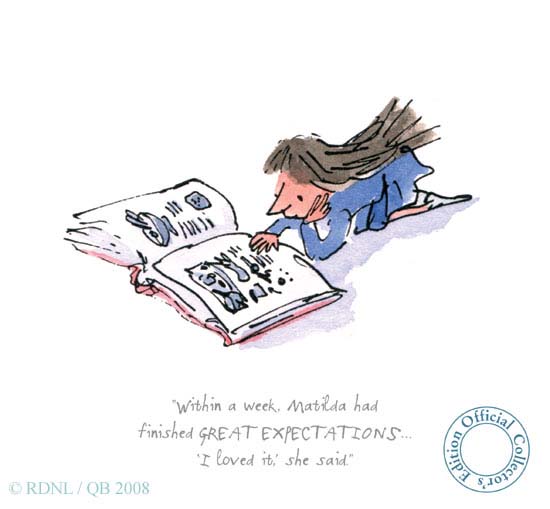
Within a week, Matilda had finished Great Expectations which in that edition contained four
hundred and eleven pages. “I loved it,” she said to Mrs Phelps. “Has Mr Dickens written any
others?”
“A great number,” said the astounded Mrs Phelps. “Shall I choose you another?”
Over the next six months, under Mrs Phelps’s watchful and compassionate eye, Matilda read the following books:
Nicholas Nickleby by Charles Dickens
Oliver Twist by Charles Dickens
Jane Eyre by Charlotte Bronte
Pride and Prejudice by Jane Austen
Tess of the D’Urbervilles by Thomas Hardy
Gone to Earth by Mary Webb
Kim by Rudyard Kipling
The Invisible Man by H. G. Wells
The Old Man and the Sea by Ernest Hemingway
The Sound and the Fury by William Faulkner
The Grapes of Wrath by John Steinbeck
The Good Companions by J. B. Priestley
Brighton Rock by Graham Greene
Animal Farm by George Orwell
It was a formidable list and by now Mrs Phelps was filled with wonder and excitement, but it was probably a good thing that she did not allow herself to be completely carried away by it all. Almost anyone else witnessing the achievements of this small child would have been tempted to make a great fuss and shout the news all over the village and beyond, but not so Mrs Phelps. She was someone who minded her own business and had long since discovered it was seldom worth while to interfere with other people’s children.
“Mr Hemingway says a lot of things I don’t understand,” Matilda said to her. “Especially about men and women. But I loved it all the same. The way he tells it I feel I am right there on the spot watching it all happen.”
”A fine writer will always make you feel that,” Mrs Phelps said. “And don’t worry about the bits you can’t understand. Sit back and allow the words to wash around you, like music.”
“I will, I will.”
“Did you know”, Mrs Phelps said, “that public libraries like this allow you to borrow books and take them home?”
“I didn’t know that,” Matilda said. “Could I do it?”
“Of course,” Mrs Phelps said. “When you have chosen the book you want, bring it to me so I can make a note of it and it’s yours for two weeks. You can take more than one if you wish.”
From then on, Matilda would visit the library only once a week in order to take out new books and return the old ones. Her own small bedroom now became her reading-room and there she would sit and read most afternoons, often with a mug of hot chocolate beside her. She was not quite tall enough to reach things around the kitchen, but she kept a small box in the outhouse which she brought in and stood on in order to get whatever she wanted. Mostly it was hot chocolate she made, warming the milk in a saucepan on the stove before mixing it. Occasionally she made Bovril or Ovaltine. It was pleasant to take a hot drink up to her room and have it beside her as she sat in her silent room reading in the empty house in the afternoons. The books transported her into new worlds and introduced her to amazing people who lived exciting lives. She went on olden-day sailing ships with Joseph Conrad. She went to Africa with Ernest Hemingway and to India with Rudyard Kipling. She travelled all over the world while sitting in her little room in an English village.
For more information on Roald Dahl visit:
http://www.roalddahl.com/
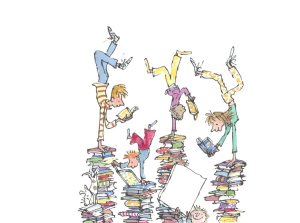
For more information on the illustrations of Quentin Blake visit:
http://quentinblake.com/
Coming up; Star Wars, The name of the Rose…
Guide to fictional Libraries #5 Kensal Rise Library
Following the lead of The Matilda Project The Alibi Library has decided to produce a short series highlighting the work of some of the best fictional libraries:
The cuts made to library services across Europe mean that many branches are themselves in danger of becoming works of fiction. In the near future these important buildings may be nothing more than fairy tale places whereof grandparents speak to their grandchildren, alongside enchanted (unpolluted) forests and crystal clear streams -No doubt the fairytale palaces will have survived (although they may need to resemble castles).
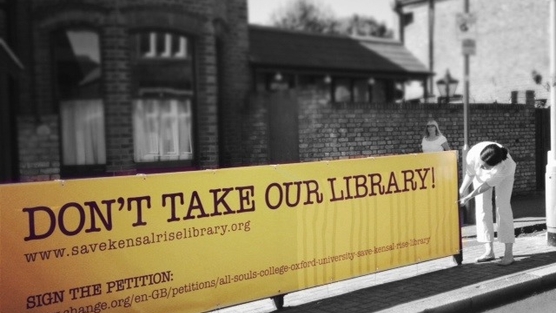
Kensal Rise Library was one of Brent’s cosy and much loved local libraries, situated in a fine historic building on the corner of Bathurst Gardens and College Road in London, United Kingdom. The site was donated by All Souls College, Oxford,[1] originally as a reading room at the corner of College Road and Bathurst Gardens, to commemorate Queen Victoria’s Diamond Jubilee in 1896, but only opened three months before her death. The architects were Done, Hunter & Co of Cricklewood.
Mark Twain
The opening took place on Thursday, 27 September 1900 (being half day closing locally), performed by the celebrated American author, Mark Twain, who had stayed at Dollis Hill House for the summer. Scots-American steel magnate and philanthropist, Andrew Carnegie, granted of £3,000 in September 1903 to enlarge the building.
The librarians
The first member of staff was H.H.Hubbard, an ex-serviceman wounded in the Boer War. His title was “Attendant” and he reported to Librarian at Willesden Green.
Service Users
Some 80 people per day used the Reading Room in its first week, and this figure rose to 150 after six months. Readers originally chose their books from a printed catalogue, then requested them at the counter, whereupon they would be fetched from the shelves by a member of staff, but in 1922 it became the first library in the Borough of Willesden to allow the public to choose their books from the shelves.
Children
A Children’s Library was established in an upstairs room in 1934, and this was decorated with murals depicting scenes from children’s classics. They were painted by two students of Willesden School of Art, Dudley Holland (‘The Three Musketeers’ and ‘Alice Through the Looking Glass’) and Maurice de Sausmarez (‘Treasure Island’). Though no longer in position, they are still extant in the building. Another upstairs room was designated as a Study Room for children.
Closure
When The library was threatened with closure, a large campaign to save it was led by figures including Alan Bennett, Philip Pullman, Zadie Smith, Nick Cave and Pet Shop Boys.[2]
Due to the current closure of the library, volunteers in the local community have set up a pop-up library outside.[5]
Coming up Matilda, Ghostbusters, Star Wars, The name of the Rose…
Guide to fictional Libraries #4 Kansas City Public Library
Following the lead of The Matilda Project The Alibi Library has decided to produce a short series highlighting the work of some of the best fictional libraries:
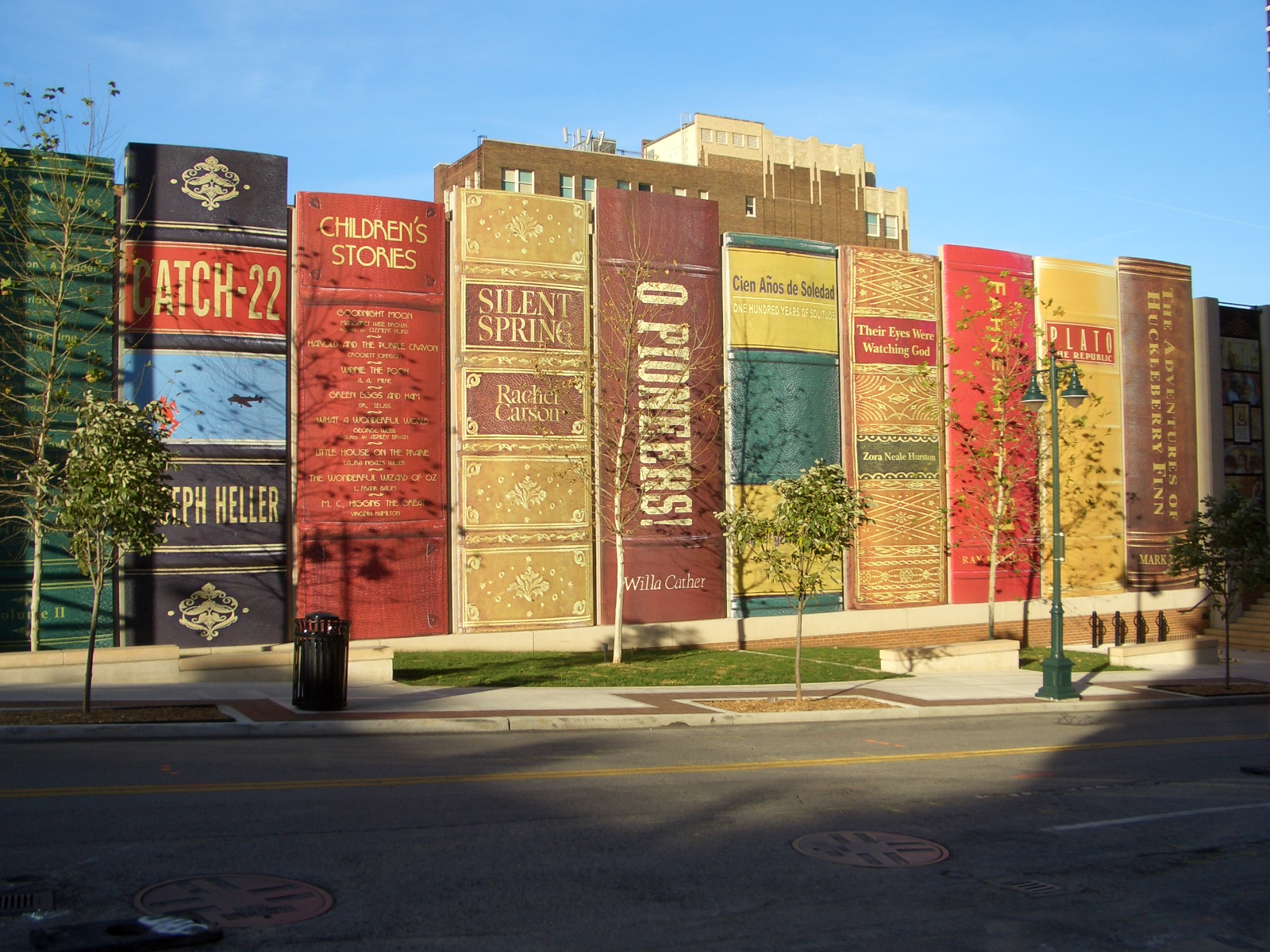
I decided to include this library in this section given that most of you just won´t believe it´s real when you see the pictures of it:
The Kansas City Public Library founded in 1873, is the oldest and third largest public library system in the metropolitan Kansas City area.
The Books
Its special collection include original published materials, news articles, post cards, photographs, maps, and city directories dating from the community’s earliest history. The Library’s Ramos Collection includes books, pamphlets, journal articles and other materials relating to African-American history and culture.
“The Community Bookshelf” (building design) itself showcases 22 titles reflecting a wide variety of reading interests as suggested by Kansas City readers and then selected by The Kansas City Public Library Board of Trustees.”
Teens Library Blog
The blog has a section on:
Teen Book Reviews – Manga
and this
Violence Among Us: Books that Focus on School Shootings
which must be something of a concern for young teens stateside.
Unfortunately Kansas City also has:
Guide to fictional Libraries #3 The Library of Babel
Following the lead of The Matilda Project The Alibi Library has decided to produce a short series highlighting the work of some of the best fictional libraries:
Imagine a library…

a universe of books http://www.nysun.com
Imagine a library whose proportions are so intangible to the likes of ordinary mortals like you and me that they have become a mathematical enigma. Here are some values just to begin with:
- The average large library on Earth at the present time typically contains only several million volumes, i.e. on the order of about
books. - The world’s largest library, the Library of Congress, has
books. - The Library of Babel contains at least
books.[2]
A mathematician´s dream come true and a librarian´s nightmare. Just imagine that the books could be arranged in
ways.[3][4]
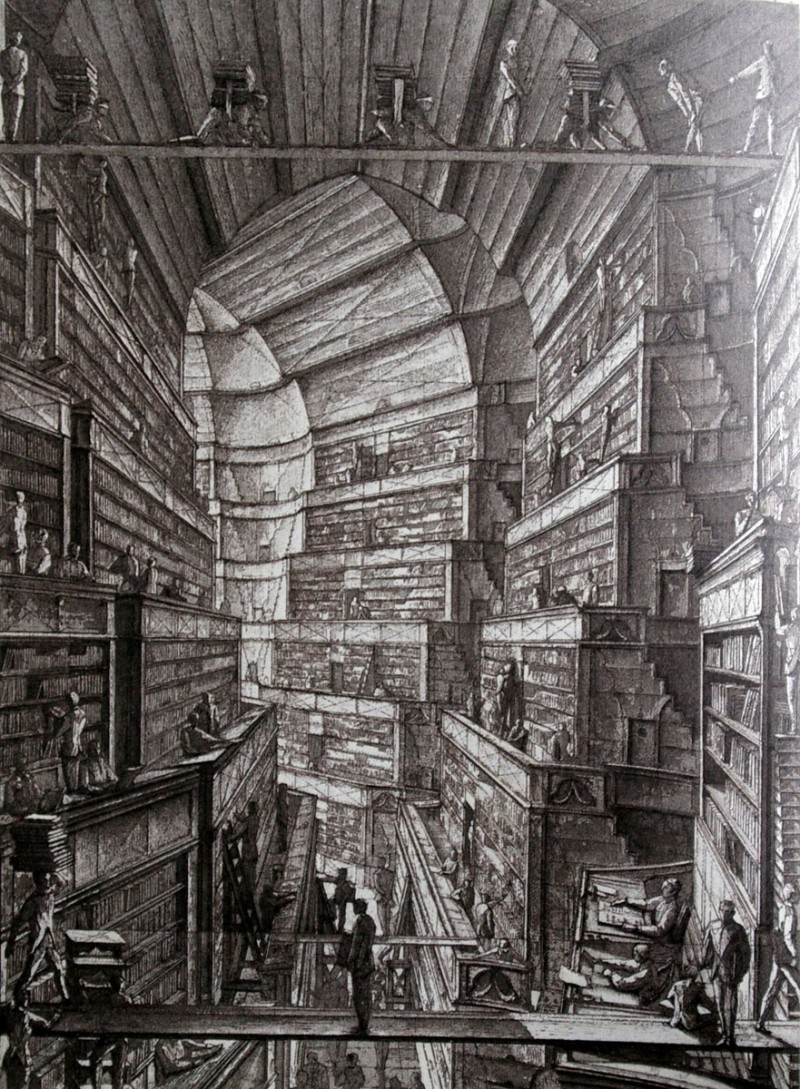
“The Library of Babel” (La biblioteca de Babel) is a story by author and librarian Jorge Luis Borges (1899–1986), conceiving of a universe in the form of a vast library containing all possible 410-page books of a certain format.
The story was originally published in Borges’s 1941 collection of stories El Jardín de senderos que se bifurcan (The Garden of Forking Paths).
The Library
consists of an enormous expanse of interlocking hexagonal rooms, each of which contains four walls of bookshelves and the bare necessities for human survival. The order and content of the books is random and apparently completely meaningless.
The universe (which others call the Library) is composed of an indefinite and perhaps infinite number of hexagonal galleries, with vast air shafts between, surrounded by very low railings. From any of the hexagons one can see, interminably, the upper and lower floors. The distribution of the galleries is invariable. Twenty shelves, five long shelves per side, cover all the sides except two; their height, which is the distance from floor to ceiling, scarcely exceeds that of a normal bookcase. One of the free sides leads to a narrow hallway which opens onto another gallery, identical to the first and to all the rest. To the left and right of the hallway there are two very small closets. In the first, one may sleep standing up; in the other, satisfy one’s fecal necessities. Also through here passes a spiral stairway, which sinks abysmally and soars upwards to remote distances. In the hallway there is a mirror which faithfully duplicates all appearances. Men usually infer from this mirror that the Library is not infinite (if it were, why this illusory duplication?); I prefer to dream that its polished surfaces represent and promise the infinite … Light is provided by some spherical fruit which bear the name of lamps. There are two, transversally placed, in each hexagon. The light they emit is insufficient, incessant.
The Books
The books contain every possible ordering of just a few basic characters (23 letters, spaces and punctuation marks) and are exactly 410 pages long.
There are five shelves for each of the hexagon’s walls; each shelf contains thirty-five books of uniform format; each book is of four hundred and ten pages; each page, of forty lines, each line, of some eighty letters which are black in color. There are also letters on the spine of each book; these letters do not indicate or prefigure what the pages will say. I know that this incoherence at one time seemed mysterious. Before summarizing the solution (whose discovery, in spite of its tragic projections, is perhaps the capital fact in history) I wish to recall a few axioms.
Though the majority of the books in this universe are pure gibberish, the library also must contain, somewhere, every coherent book ever written, or that might ever be written, including predictions of the future, biographies of any person, and translations of every book in all languages, and indeed, every possible permutation or slightly erroneous version of every one of those books.
for every sensible line of straightforward statement, there are leagues of senseless cacophonies, verbal jumbles and incoherences
For example for every authentic book there will be:
- Variants with one misprint:
= 31,488,000 - Variants with exactly two misprints:
= 495,746,694,144,000 - Variants with exactly three misprints:
= 5,203,349,369,788,317,696,000 - Variants with exactly four misprints:
= 40,960,672,578,684,980,713,193,472,000
Just one “authentic” volume, together with all those variants containing only a handful of misprints, would occupy so much space that they would fill the known universe.

stewart_borges2 http://www.mhpbooks.com
The Librarians
The glut of information leaves the librarians, chief librarians, genius librarians etc in a state of suicidal despair. This leads some librarians to have superstitions and cult-like behaviour, such as the “Purifiers”, who arbitrarily destroy books they deem nonsense as they scour through the library seeking the “Crimson Hexagon” and its illustrated, magical books. Another is the belief that since all books exist in the library, somewhere one of the books must be a perfect index of the library’s contents; some even believe that a messianic figure known as the “Man of the Book” has read it, and they travel through the library seeking him.
pilgrims disputed in the narrow corridors, proferred dark curses, strangled each other on the divine stairways, flung the deceptive books into the air shafts, met their death cast down in a similar fashion by the inhabitants of remote regions. Others went mad …
There are also inquisitors, official searchers, who
always arrive extremely tired from their journeys; …speak of a broken stairway which almost killed them; they talk with the librarian of galleries and stairs; sometimes they pick up the nearest volume and leaf through it, looking for infamous words. Obviously, no one expects to discover anything.
The Clients
are called travellers. The narrator who is himself a traveller tells us:
Like all men of the Library, I have traveled in my youth; I have wandered in search of a book, perhaps the catalogue of catalogues; now that my eyes can hardly decipher what I write, I am preparing to die just a few leagues from the hexagon in which I was born.
More information about the library can be found at the following links:
Digital Access to the Books of the Library
Wikipedia:
Guide to fictional Libraries #2 The Cemetery of Forgotten Books
Following the lead of The Matilda Project The Alibi Library has decided to produce a short series highlighting the work of some of the best fictional libraries:
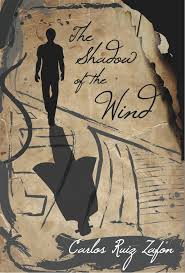
In the book The Shadow of the WInd by Carlos Zafón, set in post–war Barcelona, Daniel Sempere is taken by his father to the secret Cemetery of Forgotten Books, a huge library of old, long lost titles lovingly preserved by a select few initiates.
Location:
I followed my father through the narrow lane, more of a scar then a street, until the glimmer of the Ramblas faded behind us. The brightness of dawn filtered down from the balconies and cornices in streaks of light that dissolved before touching the ground. At last my father stopped in front of a large door of carved wood, blackened by time and humidity. Before us loomed what to my eyes seemed the carcass of a palace, a place of echoes and shadows.
The Building
Like Borge´s The Universe the library seems to defy the rules of ordinary perspective:
A blue-tinted gloom obscured the sinuous contours of a marble suitcase and a gallery of frescoes peopled with angels and fabulous creatures. We followed our host through a palacial corridor and arrived at a sprawling round hall, a virtual basilica of shadows spiralling up under a high glass dome, its dimness pierced by shafts of light that stabbed from above us. A labyrinth of passageways and crammed bookshelves rose from base to pinnacle like a beehive woven with tunnels, steps, platforms, and bridges that presaged an immense library of seemingly impossible geometry.
ahermin.deviantart.com
The Library Services
In the words of his father, Daniel is told that the library is:
“ a place of mystery, Daniel, a sanctuary. Every book, every volume you see here, has a soul. The soul of the person who wrote it and of those who read it and lived and dreamed with it. Every time a book changes hands, every time someone runs his eyes down its pages, its spirit grows and strengthens. This place was already ancient when my father brought me here for the first time, many years ago. Perhaps as old as the city itself. Nobody knows for certain how long it has existed, or who created it. I will tell you what my father told me, though. When a library disappears, or a bookshop closes down, when a book is consigned to oblivion, those of us who know this place, its guardians, make sure that it gets here. In this place, books no longer remembered by anyone, books that are lost in time, live forever, waiting for the day when they will reach a new reader’s hands. In the shop we buy and sell them, but in truth books have no owner. Every book you see here has been somebody’s friend.
seekraz.wordpress.com
The Librarian
The librarian himself is: A smallish man with vulturine features framed by thick grey hair with an impenetrable aquiline gaze.
The Clientele
The boy Daniel tells us:
I could make out about a dozen human figures scattered among the library’s corridors and platforms. Some of them turned to greet me from afar, and I recognised the faces of various colleagues of my father’s, fellows of the secondhand-booksellers´guild. To my ten-year-old eyes, they looked like a brotherhood of alchemists in furtive study.
(Picture courtesy of Scoutiegirl and inspired by the Shadow of the Wind www.scoutiegirl.com/)
Membership
According to tradition new members are expected to:
choose a book, whichever he wants, and adopt it, making sure that it will never disappear, that it will always stay alive. It’s a very important promise. For life.
More information about the library can be found at the following links:
A walk around Barcelona related to the book:
http://www.carlosruizzafon.co.uk/shadow-walk.html
A fantastic trailer for the hypothetical film:
http://www.youtube.com/watch?v=QKaRItFSd8w
On the website of the book you can find this really cool game:
http://www.carlosruizzafon.com/la-sombra-del-viento/juego/juego.htm
Don´t miss the next in the series: # 3 J L Borges´ The Universe
Guide to fictional Libraries #1 Hogwarts
Following the lead of The Matilda Project The Alibi Library has decided to produce a short series highlighting the work of some of the best fictional libraries:
The Hogwarts Library is located on the Third and fourth floors, Training Grounds Tower, of Hogwarts Castle and contains tens of thousands of books on thousands of shelves. Overseen by Madam Irma Pince, the library is where students can go to peruse or borrow books to supplement their studies (or for personal enjoyment). The library closes at 8:00 pm.
Included in its many sections are:
- An Invisibility Section
- A Dragon Section
- A Reference Section[2]
- A Legal Section[3]
- A Restricted Section
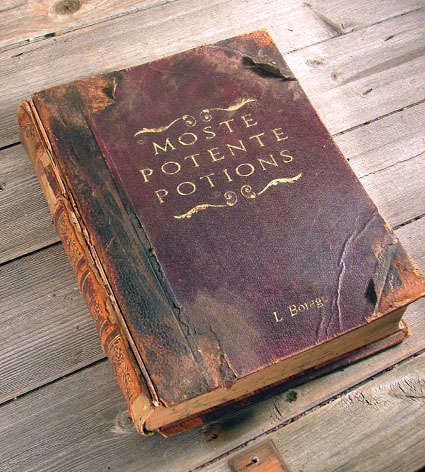
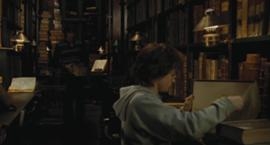
- “Harry wandered over to the Restricted Section. He had been wondering for a while if Flamel wasn’t somewhere in there. Unfortunately, you needed a specially signed note from one of the teachers to look in any of the restricted books, and he knew he’d never get one. These were the books containing powerful Dark Magic never taught at Hogwarts, and only read by older students studying advanced Defence Against the Dark Arts.“

The Restricted Section is an area in the Hogwarts Library closed off by a rope and only accessible to students with permission from a professor, some of the books in the library are chained to the shelves, which would suggest some of them are particularily valuable. In order to enter, they must present a signed note from a professor. The books within the Restricted Section typically discuss the Dark Arts or other information not for the general public or young children. They may be studied by older students for Defence Against the Dark Arts.
Hogwarts Library’s Security Seal.
Added by Seth Cooper
Information courtesy of J.K. Rowling and the http://harrypotter.wikia.com/wiki/
Don´t miss the next in the series: # 2 The Cemetery of Forgotten Books
From the archives:
Smokescreen?
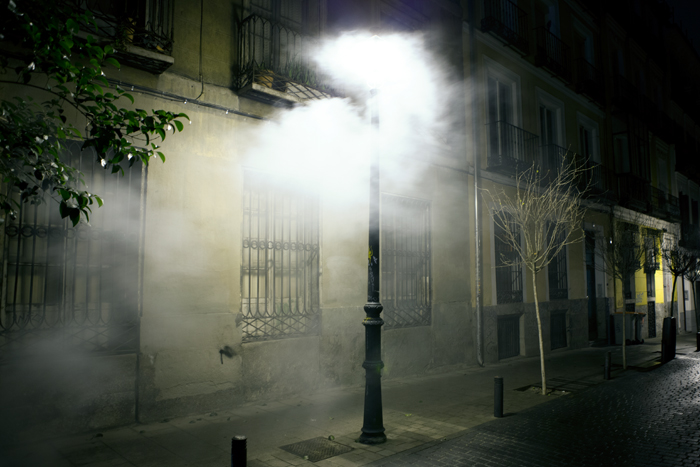
These images from the ever excellent intervention artists Luzinterruptus, show us the dreary underbelly of Madrid, the sort of sinister place where the underworld and government ministers might mix in murky schemes. Smoke as a form of protest. No smoke without fire….
Brings to mind this description from Dickens´ London:
Fog everywhere. Fog up the river, where it flows among green aits and meadows; fog down the river, where it rolls defiled among the tiers of shipping and the waterside pollutions of a great (and dirty) city. Fog on the Essex marshes, fog on the Kentish heights. Fog creeping into the cabooses of collier-brigs; fog lying out on the yards, and hovering in the rigging of great ships; fog drooping on the gunwales of barges and small boats. Fog in the eyes and throats of ancient Greenwich pensioners, wheezing by the firesides of their wards; fog in the stem and bowl of the afternoon pipe of the wrathful skipper, down in his close cabin; fog cruelly pinching the toes and fingers of his shivering little ’prentice boy on deck. Chance people on the bridges peeping over the parapets into a nether sky of fog, with fog all round them, as if they were up in a balloon, and hanging in the misty clouds.
Bleak House
Or this from T.S. Elliot:
“The yellow fog that rubs its back upon the window-panes The yellow smoke that rubs its muzzle on the window-panes Licked its tongue into the corners of the evening Lingered upon the pools that stand in drains Let fall upon its back the soot that falls from chimneys Slipped by the terrace, made a sudden leap And seeing that it was a soft October night Curled once about the house, and fell asleep” ― T.S. Eliot, The Love Song of J. Alfred Prufrock and Other Poems
Visit Luzinterruptus on http://www.luzinterruptus.com/ to find out more about their projects.